Keyhole
Secret handoff for AI coding agents.
Hand a secret to your AI coding agent through a localhost form; the agent gets a reference, not the raw value.
What it is
Keyhole is a local secret handoff tool for AI coding agents. You enter a value through a localhost form, store it in Keychain, a file, or an env file, and give the agent only a reference.
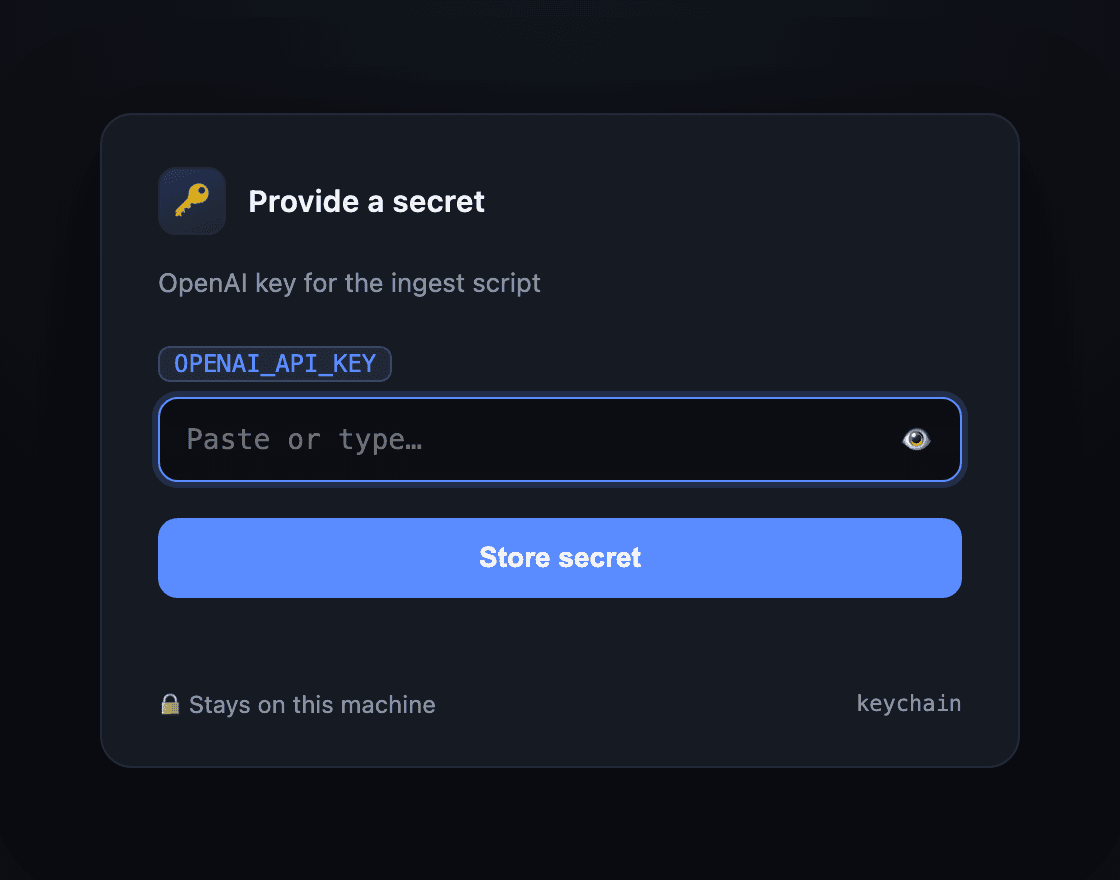
The agent gets a usable reference while the secret stays in a local store the developer controls.
Who it is for
Keyhole is for developers who use AI agents on real codebases and want the agent to complete setup work without making credentials part of a chat transcript.
Why I built it
AI coding workflows constantly need credentials: API keys, tokens, webhook secrets, test account passwords. Pasting those values into chat is convenient, but it turns a local development task into a data-handling problem.
Keyhole keeps the agent productive without making the raw secret part of the conversation.
The constraint
The tool had to be useful in the moment an agent needs a credential, while preserving a clear trust boundary. Adding a hosted account, a new vault, or a complicated approval flow would solve the wrong problem.
Product decisions
- Keep the sensitive input outside chat.
- Return a reference the agent can use in commands or configuration.
- Make the workflow local-first and boring on purpose.
- Support common destinations instead of inventing a new secret store.
Technical notes
The useful boundary is the handoff. The agent can still complete the setup task, but the secret itself stays in a local system the developer controls. I built the local form, CLI workflow, and storage handoff as one small product rather than asking users to change how they already manage secrets.
Status
Keyhole is public and fits the shape of tooling I want more of: small, local, pragmatic utilities that make agent workflows safer without adding ceremony.